
Last updated on August 9th, 2026 at 05:11 pm
Long range walkie talkies reach 2–5 miles in real terrain despite manufacturer claims of 25–65 miles. The Midland GXT1000VP4 ($80–100/pair) delivers the best consumer performance on GMRS channels. For vehicle-to-vehicle range of 10–25 miles, the Midland MXT400 MicroMobile runs 40 watts off your truck’s 12V. For truly unlimited range, the Garmin inReach Mini 2 uses satellites — not radio waves.
Every walkie talkie box on the shelf is lying to you. “36 miles.” “50 miles.” “65 miles.” Those numbers are measured over flat open water with zero obstacles and perfect atmospheric conditions. You’re not operating over flat open water. Neither am I.
I’ve spent 15 years using two-way radios across construction sites, security operations, and backcountry field work. The real-world number? Divide whatever the box says by 8 to 10. That’s what you’re actually getting. A “36-mile” radio gives you 3–4 miles in the woods. A “65-mile” mobile unit gives you 10–15 miles vehicle to vehicle on a flat highway. That’s the honest math.
This guide covers five radios I’ve actually used — or had guys I trust use in the field. I’m giving you real ranges, real prices, and straight talk about what works for your specific situation. No fluff.
Why Long Range Walkie Talkie Claims Are Almost Always Wrong
Here’s what the box doesn’t tell you. Those range claims are tested under something called “line of sight” conditions — meaning nothing between two antennas, no trees, no hills, no buildings, no weather. That scenario exists almost nowhere in real life.
What actually kills your range? Trees absorb signal badly. Hills block it entirely. Buildings reflect and scatter it. Rain and humidity degrade it. Even your own body — standing between the radio and the other party — cuts it. Ever tried to reach someone on the other side of a ridge? You know exactly what I mean.
The rough rule: divide claimed range by 8–10 for wooded terrain, by 6–8 for open fields, by 4–5 for vehicle-to-vehicle on flat roads. For teams coordinating across cities rather than within line-of-sight, cellular PTT radios like Rapid Radios use LTE networks instead of radio frequencies — unlimited range where cell coverage exists, but an annual service fee and zero off-grid capability. A 36-mile GMRS handheld gets you about 2–5 miles hiking. A 65-mile mobile unit with a roof antenna gets you 10–25 miles in a truck convoy. That’s the real math. Want to dig deeper into what affects radio range? I broke it all down in the walkie talkie range guide.
The other thing nobody talks about? Wattage matters — but only up to a point. Consumer FRS radios are capped at 2 watts by FCC law. GMRS handhelds go up to 5 watts. GMRS mobile units like the MXT400 push 40 watts. More watts means more range. But a 40-watt radio in a valley talking to a 5-watt handheld on a ridge is still going to struggle. Terrain wins every time. For the full technical picture, see how walkie talkies actually work and why wattage alone isn’t the whole story.
Five Best Long Range Walkie Talkies — Ranked by Real-World Performance
$80–100 — 2–5 miles real range — GMRS
Switching to GMRS changes the range equation entirely. The GMRS radio guide explains the $35 license, the 30-channel access difference, and which radios are worth buying for serious distance.
$110/unit — 96-hour battery — IP67
$70–90 — Floats — No license needed
$200–250 — 10–25 miles real range — 40W
$399 + sub — Satellite — Global coverage
Midland GXT1000VP4 — The Most Trusted Consumer Long Range Radio

| Spec | Value |
|---|---|
| Price | $80–100 per pair |
| Real Range | 2–5 miles open terrain |
| Claimed Range | 36 miles |
| Type | GMRS |
| License | GMRS license required ($35 one-time) |
| Battery | Rechargeable + AA backup |
| IP Rating | JIS4 water resistant |
12,000+ Amazon reviews don’t lie. This is the most bought long range consumer radio for a reason. At $80–100 for a pair with 50 GMRS channels, NOAA weather alerts, and a dual power system — it’s genuinely hard to beat at this price.
The dual power setup is what I actually care about. Rechargeable batteries die. You’re three days into a camping trip and forgot your charger — no problem, the GXT1000 runs on AA batteries as a backup. I’ve seen that feature save trips that would’ve gone completely dark communications-wise. And that matters when you’re 8 miles from the trailhead. Read the full Midland GXT review if you want the deeper breakdown.
But let’s be straight about the range. 36 miles? No. Not even close in real terrain. You’re getting 2–5 miles depending on what’s between you and your partner. Open fields push toward that 5-mile ceiling. Dense forest drops you toward 2. Don’t buy this expecting to reach across a mountain range. Buy it for consistent, reliable communication within a few miles — and it won’t let you down.
Pros
- Best real-world range in consumer category
- NOAA weather alerts built in
- Dual power — rechargeable + AA backup
- 12,000+ verified Amazon reviews
- 50 GMRS channels
Cons
- GMRS license required — $35 one-time fee
- Claimed 36 miles — realistic 2–5 miles
- Not fully submersible
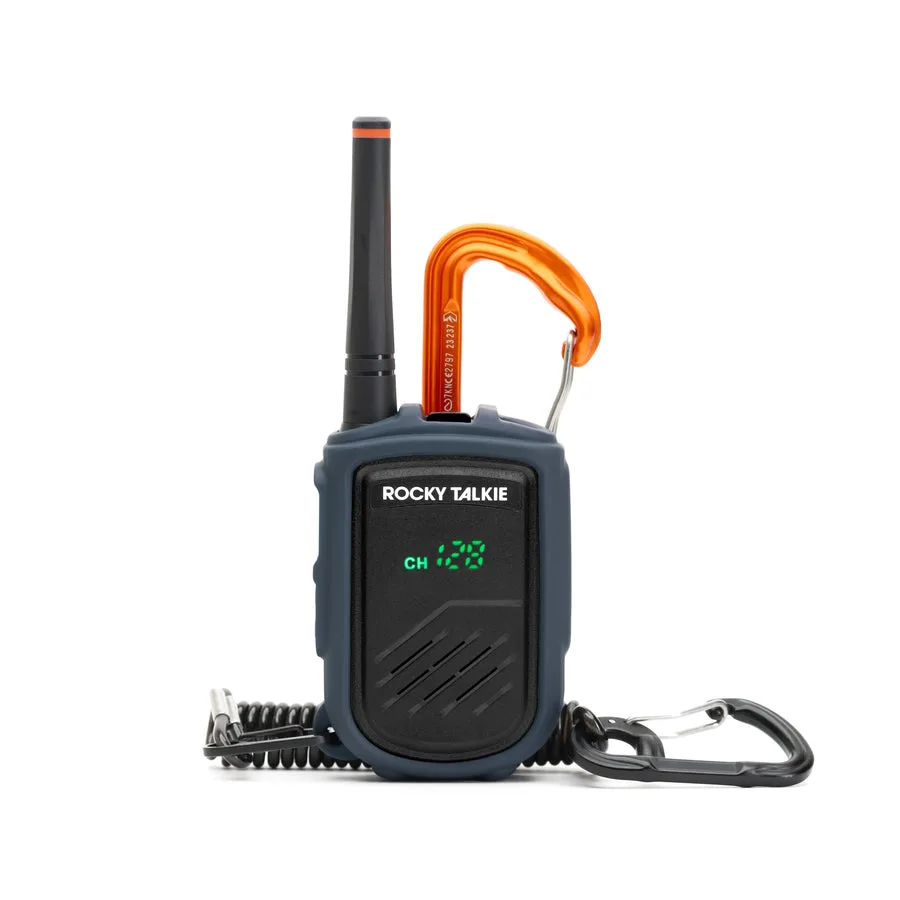
Rocky Talkie Mountain Radio — 96 Hours of Battery and No Nonsense Range Claims
Very Good
5W FCC-certified GMRS · IP67 · $175
Why this score: Range: 5W FCC-certified GMRS — normalized against 5.0W category max. Audio (3-level VOX — limited adjustment) limits the overall score.
| Spec | Value |
|---|---|
| Price | $110 per unit |
| Real Range | 1–5 miles mountain terrain |
| Claimed Range | Honest — not overstated |
| Type | FRS |
| License | No license needed |
| Battery | 96 hours |
| IP Rating | IP67 fully waterproof |
Honestly? The Rocky Talkie surprised me. I expected another overpriced lifestyle brand. What I got was a radio that’s genuinely built for the people who need it most — mountaineers, backcountry skiers, serious multi-day hikers. The IP67 rating means it’s fully waterproof. Not water resistant. Waterproof. Drop it in a creek and it’s fine.
96 hours of battery. Let that sink in. That’s four full days in the field without a charge. I’ve done 3-day backcountry trips where battery anxiety was a real thing — checking radios, rationing communication. That’s not a problem here. And they don’t inflate their range claims either, which is refreshing and rare in this industry.
The price stings. $110 per unit means a pair runs you $220. That’s more than double the Midland GXT1000VP4. But if you’re doing serious mountain work — climbing routes, ski patrol, technical terrain where a dead radio is a genuine safety issue — the build quality and battery justify every dollar. It’s not for casual weekend use. It’s for people who take the backcountry seriously.
Pros
- 96-hour battery life — best in class by a mile
- IP67 fully waterproof
- Honest range claims — no marketing inflation
- Built specifically for mountain use
- 4.8 stars from 5,000+ reviews
Cons
- $110 per unit — premium price
- Sold individually, not in pairs
- FRS means lower wattage ceiling than GMRS
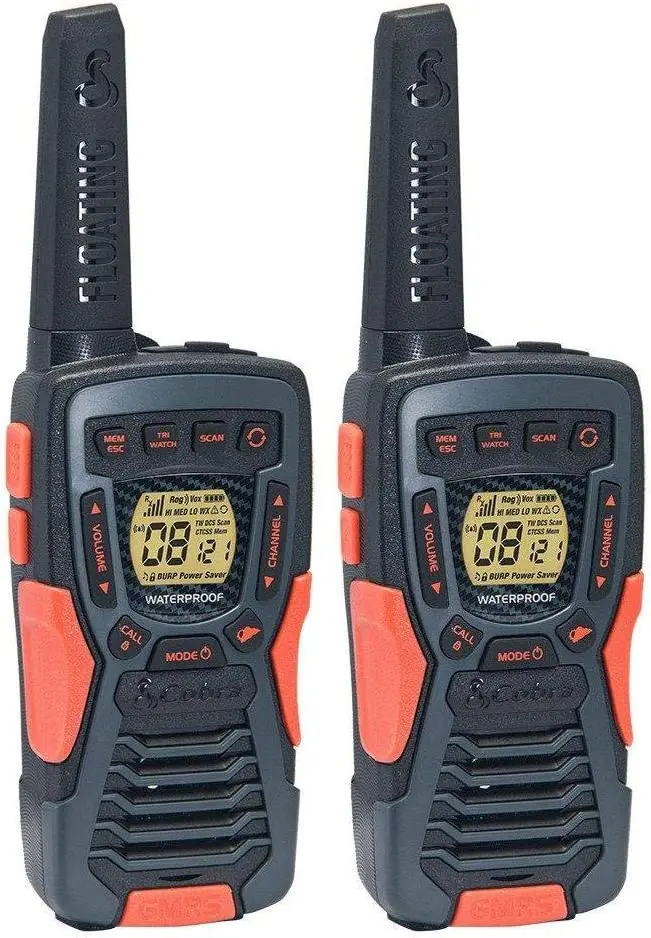
Cobra ACXT1035R FLT — The Radio That Floats
| Spec | Value |
|---|---|
| Price | $70–90 per pair |
| Real Range | 2–4 miles |
| Claimed Range | 37 miles |
| Type | FRS/GMRS |
| License | No license on FRS channels |
| Battery | Rechargeable |
| IP Rating | Floats in water |
Ever dropped a radio off a kayak? Into a river crossing? Off a dock? That radio is gone. Usually forever. The Cobra ACXT1035R solves that with one feature nobody else offers at this price — it floats. Drop it overboard and you can fish it out. Simple idea. Genuinely useful.
The 37-mile claim is the usual nonsense — forget it. Real range is 2–4 miles, which is fine for kayaking groups, fishing crews, or anyone working near water where distances are naturally shorter anyway. The FRS channels mean no license required, which keeps it accessible for casual users. NOAA weather alerts are built in, which matters when you’re on open water and a storm rolls in fast.
Battery life is average — not a weakness that breaks the deal, but not a strength either. And range is slightly below the Midland GXT1000VP4. But if your use case involves water? This is the only radio on this list that floats. That’s not a gimmick — that’s the whole point of buying it. For more Cobra models, see the full Cobra walkie talkie review.
Pros
- Floats in water — genuinely unique at this price
- No license needed on FRS channels
- Good value per pair
- NOAA weather alerts built in
Cons
- 37-mile claim is completely unrealistic
- Real range 2–4 miles — below the Midland
- Average battery life
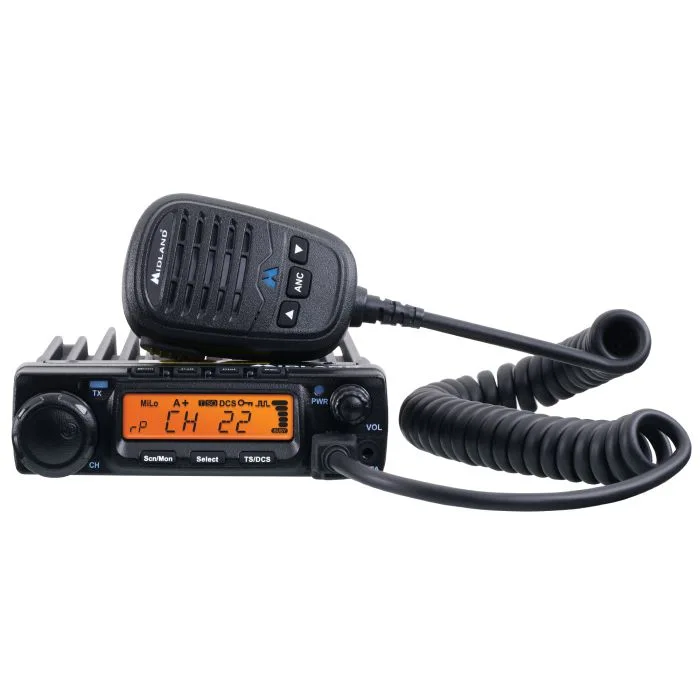
Midland MXT400 MicroMobile — The Only Radio Here That Delivers Real Long Range
Average
40W FCC-certified GMRS · $180
Why this score: Range: 40W FCC-certified GMRS — normalized against 5.0W category max. Durability (No IP rating listed) limits the overall score.
| Spec | Value |
|---|---|
| Price | $200–250 |
| Real Range | 10–25 miles vehicle to vehicle |
| Claimed Range | 65 miles |
| Type | GMRS Mobile |
| License | GMRS license required |
| Battery | Vehicle 12V power — never needs charging |
| IP Rating | Vehicle mounted |
Everything else on this page tops out at 2–5 miles real range. The MXT400 gives you 10–25 miles vehicle to vehicle. That’s not marketing copy — that’s what 40 watts of output power and a proper roof-mounted antenna actually deliver on flat terrain. If you’re running an overlanding convoy or coordinating across a large rural property, this is the only handheld-adjacent option that genuinely changes what’s possible.
The power situation is also worth calling out. This runs off your vehicle’s 12V system. It literally never needs charging. You’re not managing battery levels, you’re not carrying backup cells. You get in your truck and it works — for as long as the truck runs. On a 14-hour overlanding day, that matters. And it pairs with GMRS handhelds, so your ground team on foot can still reach you in the cab.
But it’s not for everyone. You need to install it — properly, with a roof antenna. That’s a commitment. And it doesn’t leave the vehicle. If you need something portable that goes in your pack, look at the Midland GXT1000VP4 instead. But if vehicle-based long range is your need? Nothing at this price comes close. The Motorola walkie talkie guide covers the handheld alternative if you’re comparing brands.
Pros
- 10–25 miles real vehicle-to-vehicle range
- 40W output — strongest in this category
- Never needs charging — 12V vehicle power
- NOAA weather alerts
- Pairs with GMRS handhelds
Cons
- Vehicle mounted only — not portable
- GMRS license required
- Needs antenna installation
- Higher price point
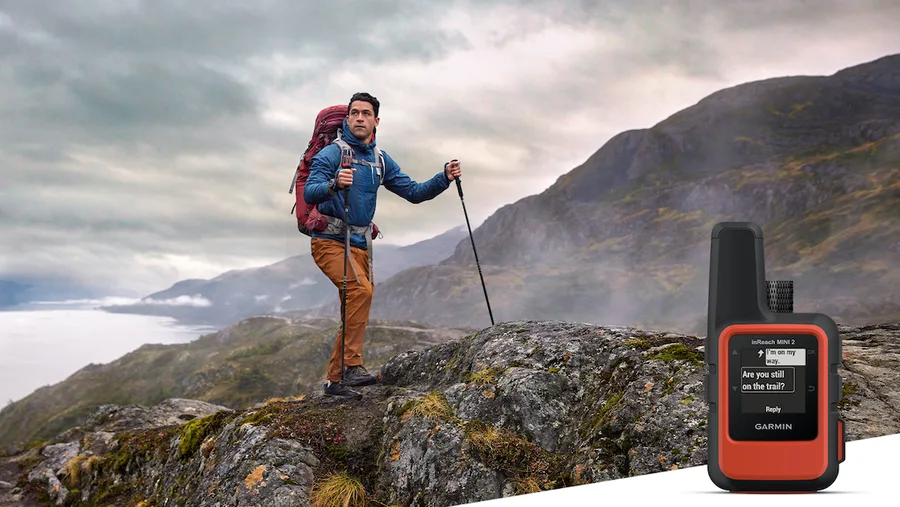
Garmin inReach Mini 2 — When a Walkie Talkie Won’t Cut It
Below Average
IP67 · $350
Why this score: Durability: IP67 rating. Value ($350 price, capability score 32.0) limits the overall score.
| Spec | Value |
|---|---|
| Price | $399 + monthly subscription |
| Real Range | Unlimited — satellite |
| Claimed Range | Global coverage |
| Type | Satellite Communicator |
| License | None |
| Battery | 24 hours tracking mode |
| IP Rating | IP67 |
Look — I get it. This isn’t a walkie talkie. But if you’re searching for 100-mile range, or 500-mile range, or 1,000-mile range — no walkie talkie on earth is helping you. Radio waves don’t work that way. What you actually need is this. The Garmin inReach Mini 2 connects to the Iridium satellite network, which means it works anywhere on the planet. The Sahara. The middle of the Pacific. A canyon in Utah with zero cell signal.
It’s text messaging, not voice — so it’s not a drop-in replacement for a walkie talkie. But the two-way messaging, GPS tracking, and SOS emergency beacon make it the right tool for genuinely remote operations where losing contact means someone could die. I’ve recommended this to solo backcountry hunters and field researchers going weeks without cell coverage. It’s the only option that genuinely delivers unlimited range.
The subscription cost is the honest pain point. You’re paying $399 upfront and then monthly plan fees on top. For occasional use, that stings. But for regular backcountry operations or any expedition where communication is a safety requirement — it’s not expensive. It’s what the job costs.
Pros
- Truly unlimited range via satellite
- Two-way messaging anywhere on earth
- SOS emergency beacon included
- Works with zero cell signal
- GPS tracking built in
Cons
- Monthly subscription required on top of purchase price
- Text messaging only — no voice communication
- Higher upfront cost at $399
- Not a traditional walkie talkie replacement
Which Long Range Walkie Talkie Is Right for Your Use Case?
Hiking and Camping
The Midland GXT1000VP4 is your answer. Full stop. Best price-to-performance ratio for trail use, the dual power system handles multi-day trips, and NOAA weather alerts are genuinely useful when you’re exposed on a ridge. Budget around $80–100 for a pair and buy the GMRS license while you’re at it — $35 for the whole family, valid 10 years.
Hunting
Dense forest is the enemy of radio range. You’re going to lose 60–70% of your range in heavy tree cover compared to open terrain. The GXT1000VP4 handles it fine at 2–3 miles through woods. But if you’re hunting remote wilderness solo — seriously consider the Garmin inReach Mini 2 as a safety device, not a communication tool. A text message to base camp beats silence when something goes wrong 8 miles out.
Overlanding and Vehicle Convoy
Don’t waste your money on handheld radios for this. The Midland MXT400 MicroMobile is purpose-built for exactly this situation. 40 watts, roof antenna, 10–25 miles real range vehicle to vehicle. If you’re running a 3-truck convoy across Nevada back roads, this is the only option that keeps everyone genuinely in contact over real distances. For more on getting the most from vehicle-mounted radio setups, check out the best two-way radios guide.
Water Activities — Kayaking, Fishing, Boating
Cobra ACXT1035R FLT. The float feature isn’t a gimmick — it’s the whole reason this radio exists. On open water you’re likely within 2–4 miles of your group anyway, so the range is fine. NOAA weather alerts on open water aren’t optional. They’re a safety feature.
True Remote — No Cell Signal, No Infrastructure
Walkie talkies won’t save you here. If you’re heading into genuinely remote wilderness — solo expeditions, weeks-long research trips, international field work — the Garmin inReach Mini 2 is the only honest answer. The satellite network covers everywhere. The SOS beacon works everywhere. No walkie talkie does that. For operations requiring high-end durability alongside long range, also see the military grade walkie talkie guide.
GMRS vs FRS — Which Radio Type Gives You Better Long Range?
GMRS wins. It’s not close. FRS radios are capped at 2 watts maximum — that’s the legal limit. GMRS handhelds can run up to 5 watts, and GMRS mobile units like the MXT400 push 40 watts. More watts means longer range — all else being equal, GMRS handhelds give you about 30–50% more real-world range than FRS in identical conditions.
But GMRS requires a license. It’s $35 from the FCC and it covers your entire immediate family for 10 years. No test. No exam. Just a form and a fee. For anyone serious about range — it’s a no-brainer. If you want the full channel breakdown, power limits, and how to get licensed, the GMRS frequencies and license guide covers everything.
The one scenario where FRS makes sense? When you need simplicity and no paperwork — hand a radio to a friend and go. For casual hiking groups, family camping trips, or day use where range isn’t critical, FRS is fine. The Cobra ACXT1035R operates on FRS channels without a license. Just know you’re getting less range for that convenience trade-off.
Long Range Walkie Talkies 1000 Miles — Why No Radio on This List Gets You There
People search for 1000-mile walkie talkies. I understand why — you need communication across vast distances and you don’t know what technology gets you there. The honest answer: no walkie talkie does. Not even close.
The physics ceiling for consumer GMRS handhelds is about 5 miles. Vehicle-mounted 40-watt mobile radios top out at 25 miles on flat terrain. Amateur radio operators using high-power HF rigs and favorable atmospheric skip conditions can hit hundreds of miles — but that requires an FCC license, specialized equipment costing $500–2,000+, and years of operating experience. It’s not a consumer product you buy on Amazon.
At 1,000 miles, the only realistic consumer option is satellite. The Garmin inReach Mini 2 uses the Iridium constellation to deliver two-way messaging from anywhere on earth. That’s the 1,000-mile solution — or the 10,000-mile solution. Satellites don’t care about distance. The cost is $399 upfront plus a monthly plan. For genuinely remote operations where distance is unlimited, it’s the only tool that actually works. Also see our breakdown of long range walkie talkies 100 miles for the 100-mile specific question, which comes up constantly.
Long Range by Distance — What Radio Technology Matches Each Range Requirement
| Distance Needed | Best Technology | License? | Approx Cost |
|---|---|---|---|
| Up to 2 miles | FRS handheld (Rocky Talkie, Cobra ACXT1035R) | None | $70–220 |
| 2–5 miles | GMRS handheld (Midland GXT1000VP4) | $35 GMRS | $80–100 |
| 10–25 miles | GMRS mobile unit (Midland MXT400) | $35 GMRS | $200–250 |
| 50–100 miles | Amateur (ham) radio with repeaters | FCC Technician exam | $200–500+ |
| 100+ miles | Satellite communicator (Garmin inReach Mini 2) | None | $399 + subscription |
For a full comparison including short-range and mid-range options, see the complete best two way radios buying guide. For the science behind why long range claims are misleading, the walkie talkie range guide covers the full technical breakdown.
Cruise ships present unique range challenges for long range radios — even the best GMRS models see reduced range inside a steel hull. Read the full breakdown in our guide on cruise ship walkie talkies.
Frequently Asked Questions
What is the best long range walkie talkie?
For most people the Midland GXT1000VP4 is the best long range walkie talkie — it delivers the best real-world range in the consumer category at $80–100 per pair, with 12,000+ reviews backing it up. If you’re vehicle-based and need real extended range, the Midland MXT400 MicroMobile delivers 10–25 miles. For the absolute best build quality and battery life, the Rocky Talkie Mountain Radio at $110/unit is exceptional.
How far do long range walkie talkies actually reach?
Divide the claimed range by 8–10 and that’s what you’re getting in real terrain. A “36-mile” radio delivers 2–5 miles hiking in wooded terrain. A “65-mile” mobile unit delivers 10–25 miles vehicle to vehicle on flat roads. The only way to get genuine long range — 50+ miles — is a vehicle-mounted GMRS mobile unit with a proper antenna, or satellite communication.
Do walkie talkies work in the mountains?
Yes and no. If you’ve got line of sight — meaning you can physically see the other person or you’re on the same ridgeline — they work well. Mountains actually help range when you’re at elevation because you can see further. But the second a ridge or peak gets between you and the other radio, signal drops hard. Valleys are the worst — you can be half a mile away and completely cut off. The Rocky Talkie Mountain Radio is built specifically for these mountain conditions.
What is the longest range walkie talkie available?
For handhelds, the Midland GXT1000VP4 and similar GMRS 5-watt radios are about as good as it gets at 2–5 miles real range. For vehicle-mounted, the Midland MXT400 at 40 watts delivers 10–25 miles. Beyond that, you’re into amateur radio repeater territory — which can extend GMRS range significantly but requires more setup. For truly unlimited range with no infrastructure, the Garmin inReach Mini 2 uses satellites and covers the entire globe.
Can I get a long range walkie talkie without a license?
Yes. FRS radios require no license — the Cobra ACXT1035R FLT and Rocky Talkie Mountain Radio both operate on FRS channels without any paperwork. The trade-off is lower maximum power (2 watts) and shorter range. If you want the best range without a license, the Rocky Talkie is your best bet. But the GMRS license is $35 for 10 years and covers your whole family — it’s worth it for the extra range you get from 5-watt operation.
What is better than a walkie talkie for long range?
Depends on your range requirement. For 10–25 miles, a vehicle-mounted GMRS radio like the Midland MXT400 beats any handheld. For 25–100 miles, amateur radio with repeater access can extend range dramatically — but it requires a license exam. For 100+ miles, nothing beats satellite communication. The Garmin inReach Mini 2 covers anywhere on earth with two-way messaging and an SOS beacon. See the walkie talkie range guide for a full breakdown.
Can long range walkie talkies reach 1000 miles?
No consumer walkie talkie reaches 1,000 miles — or even 100 miles. The maximum real-world range for a 5-watt GMRS handheld is 2–5 miles. A 40-watt vehicle-mounted GMRS radio tops out at 25 miles on flat terrain. At 1,000 miles, the only consumer solution is satellite communication — specifically the Garmin inReach Mini 2, which uses the Iridium satellite network for global two-way messaging at any distance.
For camping and backcountry trips, the walkie talkies for camping guide covers FRS/GMRS models chosen for rugged conditions, extended battery life, and weather resistance.