
Walkie Talkies, CB & Two‑Way
Radio Reviews
Honest reviews and buying guides for two way radios. Tested by real users. No sponsored rankings.
TechnicalsSolution covers every category of two-way radio communication — from consumer walkie talkies on FRS frequencies to GMRS handhelds for job sites, CB radios for truckers, and ham radio gear for emergency preparedness. Every review is independent. No manufacturer pays for placement. We’ve tested two-way radios since 2020 and the site now covers 184 pages of radio reviews, frequency guides, and buying decisions.
The right radio depends entirely on where you’re using it and whether you need a license. FRS walkie talkies need no license and work out of the box. GMRS unlocks 5-watt power and repeater access for a one-time $35 FCC household license. CB radio at 27 MHz is a completely different use case — designed for vehicle-mounted highway use, 40 channels, no license required. Ham radio is the most capable and the most complex: multiple frequency bands, FCC Technician license, and access to the widest range of hardware and infrastructure. Use the categories below to find reviews that match your specific situation.
Browse by Category
Find the right radio for your situation
Top Picks Right Now
Highest converting radios based on real purchase data
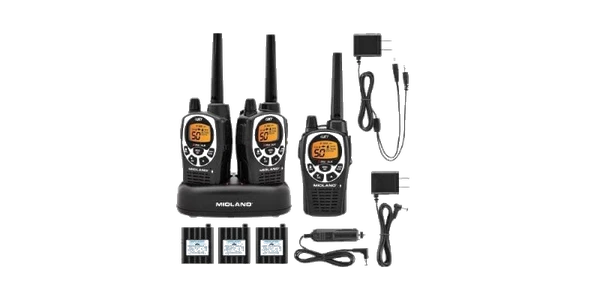
- 36 mile GMRS range
- JIS4 weather resistant
- VOX hands-free mode
- 50 GMRS channels
- Rechargeable battery
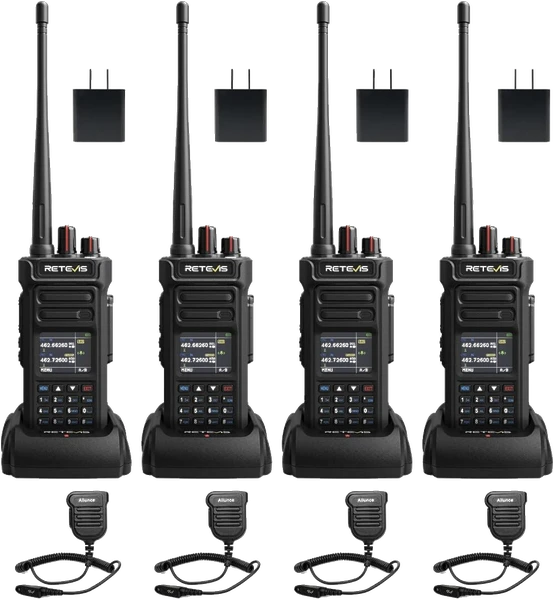
- 10 watts output power
- IP67 fully waterproof
- VOX 9 sensitivity levels
- 1000mW loud speaker
- 3200mAh long battery
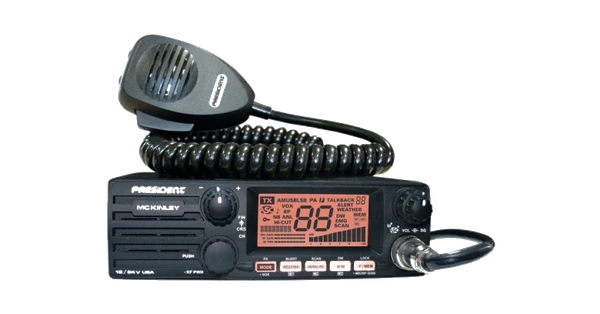
- SSB 12 watts power
- AM/FM/SSB all modes
- Built for truckers
- NOAA weather alerts
- 40 CB channels
Quick Reference Guides
Two-Way Radio Types We Cover: FRS, GMRS, CB and Ham
The “two-way radio” category contains four completely different frequency services with different power limits, license requirements, and hardware. Choosing between them is not a matter of preference — it is a matter of use case, terrain, and whether you need infrastructure access. Here is what each service covers and where it performs.
| Radio Type | Frequency Band | License | Max Power | Best Use Case |
|---|---|---|---|---|
| FRS walkie talkie | 462–467 MHz (UHF) | No license | 2W fixed | Family hikes, casual outdoor, short range |
| GMRS handheld | 462–467 MHz (UHF) | FCC license $35 | 5W handheld / 50W mobile | Job sites, groups, repeater access |
| CB radio | 26.965–27.405 MHz (HF) | No license | 4W AM / 12W SSB | Truckers, highway, rural open-terrain |
| MURS | 151–154 MHz (VHF) | No license | 2W | Business premises, indoor short range |
| Ham radio | Multiple bands (HF/VHF/UHF) | FCC Technician+ | Up to 1,500W (HF) | Emergency comms, long distance, infrastructure |
FRS and GMRS share the same 22 UHF channels but operate under different rules. FRS radios are legally capped at 2 watts and the power is fixed in hardware — you cannot upgrade them. GMRS handhelds run at 5 watts and can access the 8 GMRS-only repeater channels (channels 15–22) which extend range dramatically when a repeater is in range. The FRS and GMRS frequency guide has the full channel list with power limits per channel.
CB radio at 27 MHz behaves very differently from UHF services. The longer wavelength at HF propagates further over flat open terrain but is severely degraded by urban buildings and dense vegetation. A vehicle-mounted CB antenna on a flat highway produces far better range than a handheld UHF radio — but the opposite is true inside buildings. Our CB radio reviews cover both mobile truck units and base stations, with the full channel breakdown and when SSB matters over AM.
Frequency band determines how radio waves travel through your environment. UHF at 400–470 MHz penetrates concrete and steel better — it is why public safety, construction, and most consumer handhelds use it. VHF at 136–174 MHz carries further in open terrain with less absorption at ground level. The UHF vs VHF comparison explains the physics behind the difference and which band fits which environment. Getting this decision wrong costs range — not money on a different model.
How to Choose Between Walkie Talkies, CB Radios and GMRS
Every two-way radio purchase decision narrows to three variables: transmit power, frequency band, and the terrain between you and the other radio. Our guide to the highest-rated two-way radios covers five hand-tested models — from $30 FRS pairs for casual outdoor use up to $200 commercial-grade GMRS units. Before picking a model, the single most useful check is how far a walkie talkie actually reaches in your specific environment — open terrain, dense forest, urban buildings, and multi-floor interiors each produce completely different numbers than the box claims. If the requirement is serious distance across open land or job sites, long-range handheld radios with 5-mile-plus open-terrain reach represent a different product category with different hardware requirements.
Frequency band determines how signals behave in your environment. The UHF vs VHF radio frequency comparison explains why UHF penetrates buildings better while VHF carries further over flat open ground — a critical split for construction sites versus outdoor recreation. Consumer FRS and GMRS radios both operate in the UHF band, and understanding GMRS channel frequencies and power limits tells you exactly which channels offer 2W versus 50W output and where the FCC license requirement applies.
CB radio sits in a completely different band at 27 MHz and serves a distinct use case — our guide to top CB radios for truckers and highway use covers the 40-channel AM and SSB mobile units that have been standard road equipment for decades. Across all frequency services, most consumer radios share channels with nearby users — how CTCSS tones filter interference on shared channels explains the sub-audible squelch system that keeps your radio quiet when others transmit on the same frequency without your code.
The choice between a walkie talkie and a CB radio comes down to where you plan to use it. GMRS and FRS handhelds at UHF frequencies are the right answer for most people — recreational use, events, job sites, family camping. CB radio is a specialized tool for truckers, off-road convoy communication, and highway use where the 27 MHz band and vehicle-mounted antennas produce the range characteristics the service was designed for. For urban or indoor environments, the UHF frequency advantage over CB is significant enough to be decisive. For open highway use, nothing replaces a properly installed CB antenna on a vehicle.
Most buying decisions in the two-way radio space are made without understanding the licensed vs unlicensed divide. FRS requires no license, no application, no fee. GMRS requires a $35 FCC household license — one license covers your entire family for ten years and unlocks handhelds at 5 watts plus repeater channels. For any serious use — job site coordination, search and rescue, large outdoor groups — GMRS is the minimum standard. The heavy-duty walkie talkie category covers MIL-STD-810 certified handhelds rated for construction environments. For kid-safe walkie talkies, FRS at 2 watts with no programming requirement is the correct choice.