

Last updated on July 28th, 2026 at 03:02 am
post_content
Where are C Crane radios made? C. Crane radios are designed in Fortuna, California, but manufactured in China. The CCRadio lineup — including the CCRadio-3 and CC Skywave — is built by OEM factories in Dongguan and through Sangean Electronics collaboration agreements. C. Crane handles engineering specifications, antenna tuning, firmware, and quality sign-off from their California headquarters. Production has been China-based since the company shifted from importing to branding in the late 1980s.
C. Crane has one of the most loyal followings in consumer radio — AM DXers, preppers, and everyday listeners who rely on their radios for years. When you’re spending $80–$200 on a portable radio, knowing where it’s built and who’s overseeing production matters.
This article maps exactly where each major C. Crane model comes from, which factories are involved, what “designed in California” actually means in practice, and how their quality holds up against the field. It also covers which specific model to buy if you’re in the market right now.
C. Crane is headquartered in California — but not manufacturing there
C. Crane Company Inc. operates from 172 Main Street in Fortuna, California — a Northern California coastal town of about 12,000 people. The company has been at that address since the early 1980s.
Fortuna is a design, engineering, and support hub. There are no factory floors. No production line. The radios ship from Chinese manufacturing partners through distribution directly to customers.
That’s not unusual — virtually every consumer radio brand at this price point sources manufacturing from Asia. What separates companies is how much engineering control they keep over the process and what kind of after-sale support they back it with.
Where Are C Crane Radios Made? Factory and OEM Evidence
Two names come up consistently in C. Crane’s manufacturing history: Redsun Electronics in Dongguan, Guangdong Province, and Sangean Electronics, a Taiwanese-designed, China-built OEM widely regarded as one of the best radio manufacturers in the world.
Redsun is a mid-tier Chinese OEM with strong experience in portable AM/FM/shortwave radios. They build under multiple brand names globally. The C. Crane EP and EP Pro models trace back to Redsun through FCC ID filings — the grantee code and applicant data in the FCC database point to the Dongguan facility.
Sangean is a different tier entirely. They manufacture under their own brand in markets that demand premium quality, and they’re the OEM behind several well-regarded radio lines globally. C. Crane’s CCRadio lineage — going back to the CCRadio-2E and through the current CCRadio-3 — shares Sangean chassis engineering, with C. Crane specifying their own ferrite antenna configuration, audio output stage, and firmware on top.
C. Crane model-by-model OEM origin
Here’s what’s confirmed or strongly indicated for each current and recent model:
| Model | OEM factory | Location | Evidence source |
|---|---|---|---|
| CCRadio-3 | Sangean collaboration | China (TW-designed) | Chassis lineage, component sourcing |
| CCRadio-EP / EP Pro | Redsun Electronics | Dongguan, Guangdong | FCC ID grantee data |
| CC Skywave | Sangean-adjacent supply chain | China | PCB component matching |
| CC Skywave SSB 2 | Sangean-adjacent supply chain | China | Chassis design continuity |
| CC WiFi 3 | Generic Chinese ODM | China | FCC filing, chipset ID |
| CC Witness | Separate Chinese ODM | China | FCC filing |
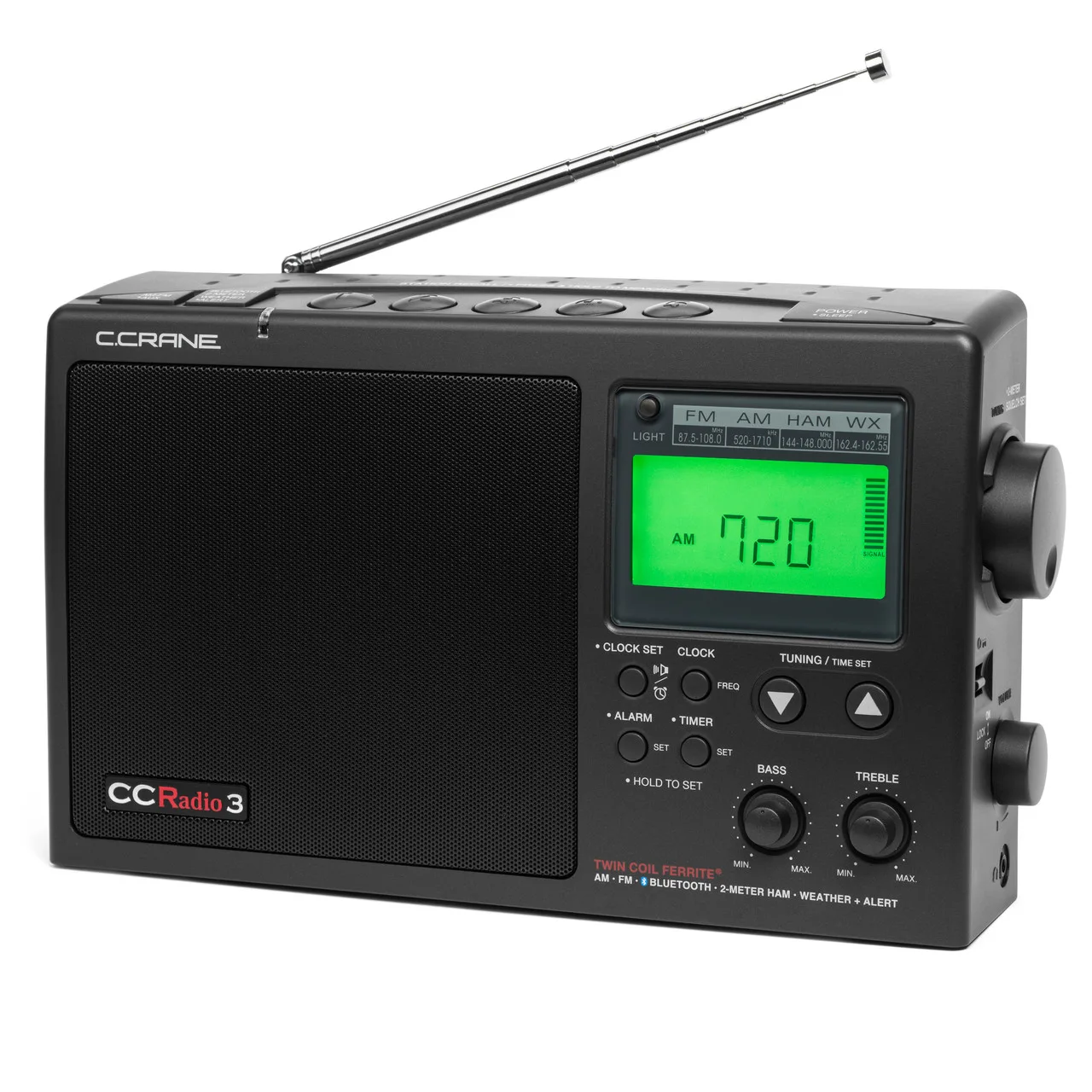
Every C. Crane model currently on sale is built in China. The difference is in which Chinese factory is involved and how much of the engineering is C. Crane’s own versus derived from the OEM’s base platform.
How C. Crane controls quality from 7,000 miles away
A US-based representative operating through Hong Kong handles quality sign-off on production runs. That’s not the same as having an engineer on the factory floor, but it means someone with direct accountability to C. Crane is checking output before it ships.
The more meaningful quality loop is their US repair center in Fortuna. C. Crane accepts mail-in repairs on their radios — something almost no other brand at this price point offers. That means failure patterns from returned units feed back into production spec changes for future runs in a way that pure resellers can’t replicate.
If a batch comes back with antenna connector failures, they can push that spec change to the factory for the next production run. It doesn’t make C. Crane an American-manufactured product, but it does make them a different category than slapping a logo on an unmodified unit sourced from an ODM catalog.
C. Crane’s history — from furniture to radio imports to branded products
C. Crane didn’t start as a radio company. Bob Crane founded the business in San Francisco in 1976 as a furniture import operation. By 1983 he had pivoted to electronics — specifically, sourcing and importing audio and radio products that American consumers couldn’t find through normal retail channels.
The early model was pure curation: European and Japanese radios sold to listeners who knew what they wanted but couldn’t buy it locally. C. Crane’s value was selection and service, not manufacturing.
That model gradually shifted as they began specifying modifications to OEM products — longer ferrite antennas, different audio tuning — and eventually to co-developing products with OEM partners. The CCRadio series that established their reputation grew from that progression.
Understanding how AM radios work at a circuit level helps explain why those antenna and audio decisions matter. C. Crane’s engineering choices, not their factory location, are what separate their AM sensitivity from cheaper competitors.
The manufacturing gap between C. Crane and budget imports
Almost every portable radio brand you can name is built in China. The question worth asking isn’t “is it made in China?” — it’s “which China factory, and what level of control does the brand have?”
Sangean themselves sell under their own name in the premium segment. When C. Crane uses Sangean as an OEM partner, they’re working with one of the most capable radio manufacturers in the world, not a low-cost volume shop.
The contrast is visible when you look at other brands in this space. Who makes Radioddity radios is a similarly layered question — the short answer is China, but through a different supply chain with different levels of brand engineering involvement. Both are China-made. The gap is in what the brand contributed before the unit left the factory.
Where Are C Crane Radios Made and Does It Affect Quality?
Not in the way the question implies. The CCRadio-3 is one of the top-rated AM radios in its price bracket by serious DXers — people who measure AM sensitivity and selectivity more carefully than any spec sheet does. That performance comes from C. Crane’s antenna and DSP choices, not from which province the factory sits in.
If you’re trying to improve your AM radio reception at home, the CCRadio-3 and CC Skywave SSB 2 consistently come up in recommendations because of those design choices — longer ferrite antenna than competitors, voice-tuned audio output, and DSP firmware that handles adjacent-channel interference better than most units at the price.
What you’re paying for with C. Crane isn’t an American-made product. You’re paying for American engineering input on a Chinese-manufactured chassis, plus US-based support and repair if something goes wrong.
The CC Skywave SSB 2 — their most complex product, same supply chain
The CC Skywave SSB 2 covers AM, FM, shortwave, NOAA weather, and single-sideband. It’s C. Crane’s most technically ambitious product and one of the few portable radios under $200 that shortwave hobbyists actually recommend.
If you want to listen to shortwave radio online before committing to hardware, that’s a reasonable first step. But for serious shortwave listening, the CC Skywave’s Sangean-adjacent chassis engineering is a significant part of why it outperforms similarly priced competitors from brands without that OEM relationship.
For weather radio specifically, where to buy NOAA weather radios covers the full range of dedicated options — but the CC Skywave SSB 2 covers NOAA alongside shortwave in a single unit, which is why it’s the go-to recommendation for listeners who want both.
Which C. Crane Radio Should You Get?
C. Crane makes a handful of models. Most people overthink the choice. Here’s how to cut through it.
For AM listening and DXing, the CCRadio-3 is the answer. It’s their flagship. Long ferrite antenna, tuned audio output, DSP that handles adjacent-channel interference better than anything else under $200. You get the full benefit of the Sangean chassis partnership plus C. Crane’s own engineering layer on top. This is the radio their reputation is built on.
If you travel and want AM plus shortwave in one unit, get the CC Skywave SSB 2. It adds single-sideband coverage — relevant if you’re listening to international broadcasts, amateur radio, or utility stations. Compact enough to pack. Technically capable enough that serious hobbyists actually use it. The Sangean-adjacent chassis means the core engineering is solid.
The CCRadio-EP Pro is the budget entry point. It’s a Redsun-sourced unit rather than a Sangean collaboration — which means a step down on AM sensitivity. But it’s $60 cheaper and covers the basics well. If you’re listening to local AM news or talk radio and not doing any DXing, it delivers what most people actually need from a portable radio.
The CC WiFi 3 is a different product category entirely — it streams internet radio, not RF signals. If that’s what you want, it works. But it’s not what built C. Crane’s reputation and it doesn’t share the same OEM engineering lineage as the CCRadio line.
If you want the best AM performance C. Crane makes and price isn’t the deciding factor: CCRadio-3. Travel plus shortwave: CC Skywave SSB 2. Budget AM: CCRadio-EP Pro.
C. Crane vs. Chinese radio brands — what the supply chain comparison actually shows
Here’s a direct comparison of how C. Crane’s manufacturing and engineering model stacks up against other brands in the portable radio segment:
| Brand | Country of manufacture | OEM partner | Engineering input | US repair? |
|---|---|---|---|---|
| C. Crane | China | Sangean / Redsun | Antenna, DSP, firmware spec | Yes — Fortuna CA |
| Sangean | China (TW-designed) | Own facilities | Full in-house development | Limited |
| Tecsun | China | Own factories | Chinese brand — own design | No |
| Grundig (via Eton) | China | OEM sourced | Brand licensing only | No |
| Sony | China | Own facilities | Japanese engineering | Limited |
| Radioddity | China | Various ODMs | Minimal spec customization | No |
C. Crane sits between a true manufacturer like Sangean and a pure reseller. They don’t design circuits from scratch — but they’re specifying antenna configurations, audio tuning, and DSP firmware that meaningfully change the product. And the US repair center closes the feedback loop in a way that a brand just slapping a logo on an ODM unit never can.
Common Questions About C. Crane Radios
Where are C. Crane radios manufactured?
C. Crane radios are manufactured in China. The company is headquartered in Fortuna, California, where they handle design specifications, antenna engineering, firmware, quality oversight, and customer support — but production takes place at Chinese OEM factories, primarily Redsun Electronics in Dongguan and Sangean-affiliated facilities.
Is C. Crane an American company?
Yes. C. Crane Company Inc. is a US-owned company founded in San Francisco in 1976 and based in Fortuna, California since the early 1980s. Engineering and support are US-operated. Manufacturing is handled by Chinese OEM partners, which is standard for consumer electronics at this price point.
Who makes C. Crane radios?
C. Crane’s two primary OEM partners are Redsun Electronics in Dongguan, China, and Sangean Electronics (Taiwan-designed, China-built). Different models use different factories — the CCRadio-EP line is confirmed via FCC ID filings as a Redsun product, while the CCRadio-3 and CC Skywave share a Sangean-adjacent chassis lineage.
Are C. Crane radios made in the USA?
No. No C. Crane radios are currently manufactured in the United States. Design, engineering specifications, and quality oversight originate from their Fortuna, CA headquarters, but all physical production happens in China. C. Crane does offer US-based repair service, which makes them unusual among brands at this price.
Is C. Crane the same company as Sangean?
No — they’re separate companies. Sangean is a Taiwanese OEM manufacturer that sells radios under their own name and builds for other brands. C. Crane has a long-standing collaboration with Sangean on CCRadio engineering, specifying their own antenna configuration, audio tuning, and firmware on top of the Sangean base platform.
How does C. Crane maintain quality if production is overseas?
C. Crane uses a US-based representative in Hong Kong to sign off on production runs. Their Fortuna repair center also returns failure data that feeds back into production spec changes. This closed loop between US support and Chinese production gives them more control than most brands at this price point exercise.
When did C. Crane start making their own branded radios?
C. Crane began as an electronics importer in 1983, selling European and Japanese radios to US customers. Over time they shifted to specifying modifications on OEM products — longer ferrite antennas, different audio tuning — and eventually to co-developing products with OEM partners. The CCRadio brand name emerged from that progression through the late 1980s and 1990s.
Does manufacturing in China affect C. Crane radio quality?
Not significantly, based on independent testing and owner reviews. C. Crane’s AM sensitivity advantage comes from engineering decisions they make — ferrite antenna length, audio output stage, DSP firmware — not from where the unit is assembled. The CCRadio-3 consistently places at the top of AM radio comparisons against competitors also built in China.