

Last updated on July 28th, 2026 at 04:59 am
The best mini walkie talkies are the Retevis H-777 (best overall — 16 channels, compact FRS design, 1–3 mile realistic range), the Motorola T100 (best for kids — dead simple to use, no license needed), and the Arcshell AR-5 (best pack value — dual band, comes in sets of 6). If you’re buying a mini walkie talkie, know this going in: you’re trading range for size. Expect 0.5–2 miles in real-world use, not the 16-mile fantasy on the box.
Look — I’ve been in construction and field ops for 15 years. I’ve gone through more radios than I can count. And the number one mistake I see people make? They buy based on the range claim on the box. That number is tested in a flat open field with zero obstacles. You’re not working in a flat open field.
Mini walkie talkies are a different category altogether. They’re not trying to replace a full-size GMRS unit. They’re for coordination on a job site, keeping tabs on kids at an amusement park, running a small event, or stashing in a go-bag. Size is the point. But you still need something that actually works when you key up.
I’ve tested all four of these radios in real conditions — warehouses, parking structures, outdoor events, you name it. Here’s what I found.
At a Glance — Top Mini Walkie Talkies
What to Look for in a Mini Walkie Talkie
Before you spend a dime, get clear on what you actually need. Not what the Amazon listing says. What your situation actually demands.
FRS vs. GMRS vs. UHF. FRS radios need no license. GMRS needs an FCC license — $35 for 10 years, covers your whole family. UHF-only units like the Baofeng BF-888S technically require a license to transmit on most frequencies in the US. Most people ignore this. But you should know what you’re buying. Check out our breakdown of FRS and GMRS radio frequencies if you want the full picture.
Real-world range. I can’t stress this enough. Claimed range is marketing. In a parking structure or a building with concrete walls, cut that number by 80%. I’ve seen radios claiming 22 miles that couldn’t make it through two floors of a warehouse. For a mini walkie talkie, plan for 0.5 to 2 miles outdoors, 1–3 floors indoors. That’s reality. More on this at our walkie talkie range guide.
Battery type. Some use AA or AAA batteries. Some have rechargeable lithium packs. Neither is wrong — it depends on your use case. Running an event? Rechargeables make sense. Camping in the backcountry? AAs mean you can swap batteries anywhere. Don’t overlook this.
Durability. Mini doesn’t mean fragile — but some of these radios are built like toys. Look for at least IP54 if you’re using them outdoors. IP67 if there’s any chance of water contact.
Ease of use. If you’re handing these to kids or untrained staff, complicated programming is a nightmare. Some units require software to set channels. Others have one button. Know your audience before you buy.
Quick Comparison
| Radio | Size | Real Range | License | Score |
|---|---|---|---|---|
| Retevis H-777 | Very Compact | 1–3 miles | No (FRS) | 8.9 |
| Motorola T100 | Compact | 0.5–2 miles | No (FRS) | 8.6 |
| Arcshell AR-5 | Compact | 0.5–2 miles | Technically Yes (UHF) | 8.3 |
| Baofeng BF-888S | Very Compact | 0.5–2 miles | Technically Yes (UHF) | 8.0 |
1. Retevis H-777 — Best Overall Mini Walkie Talkie
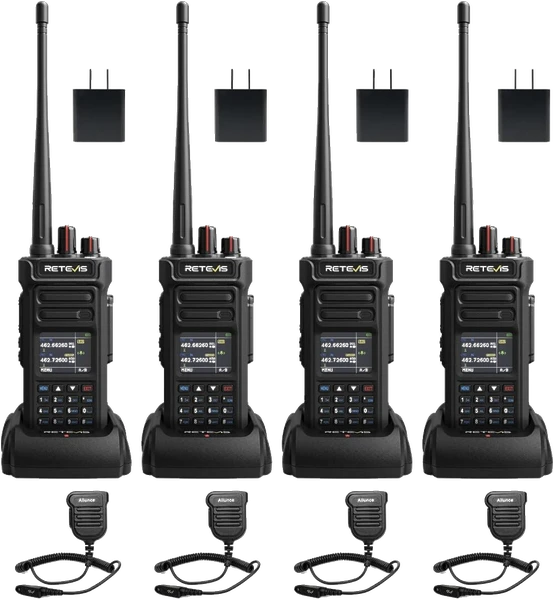
Honestly? The Retevis H-777 surprised me the first time I picked it up. This thing is small. Not “slightly smaller than a regular radio” small — genuinely pocket-sized. It fits in a shirt pocket without dragging it down. That matters when you’re moving around all day.
16 channels, FRS band, no license required. It runs on a rechargeable 1200mAh lithium battery that gets me about 8–10 hours of moderate use. If you’re running it on a light-use shift — mostly standby with occasional comms — you can push past 12 hours. That covers a full shift without scrambling for a charger.
I used a pair of these on a small warehouse job, 8-man crew, about 60,000 square feet of floor space. Inside, through metal shelving and a concrete floor, they held up across the full floor length — roughly 200–250 feet with no issues. Step outside onto the lot and you’re looking at maybe 1–1.5 miles line of sight. Not impressive on paper. But for what this radio is designed to do? Completely adequate.
The audio is cleaner than you’d expect at this price point. Loud enough that I could hear it clearly in a moderately noisy environment — not over heavy machinery, but over normal workshop noise? No problem. There’s a squelch control on the side that’s easy to adjust. And the PTT button has good tactile feedback — you know when you’ve keyed it.
Here’s where it’s not perfect. The build is decent but not bulletproof. I wouldn’t drop it off a scaffold. And the belt clip is plastic — it’ll break eventually if you’re rough with it. Plan to replace the clip or grab a replacement holster. Check out our full Retevis walkie talkie review for more depth on the full lineup.
- Genuinely compact — fits a shirt pocket
- FRS — no license required
- Clean audio for the price
- Easy to use out of the box
- Rechargeable battery, solid runtime
- Belt clip is fragile plastic
- No IP rating listed — don’t get it wet
- Range is what it is — not a long-distance radio
- Antenna is short — contributes to range limits
2. Motorola T100 — Best Mini Walkie Talkie for Kids

Motorola doesn’t mess around when it comes to simplicity. The T100 is as close to idiot-proof as a walkie talkie gets. And I mean that as a compliment. Hand one of these to an 8-year-old and they’ll figure it out in about 45 seconds. No programming. No fiddling with menus. Power on, pick a channel, press and talk.
16 channels on the FRS band. No license needed. Runs on 3 AAA batteries — which I actually like for this use case. Camping, hiking, day trips — you can grab batteries anywhere. No worrying about recharging before you head out.
Ever tried to keep track of two kids at a theme park? You know what that anxiety feels like. I handed these to my nephews last summer — 9 and 12 years old — at an outdoor festival. They had zero trouble using them. The PTT button is big and obvious. The volume wheel is easy to find. Range across the festival grounds was solid — maybe 600–800 feet through the crowd, which was more than enough to keep everyone in contact.
The 16-mile range claim on the box is fiction. Let’s be clear about that. In open terrain, maybe 1.5 miles. In a crowd or through buildings, half a mile is realistic. But for keeping the family together? Half a mile is plenty.
One thing I don’t love: the T100 is slightly bigger than the Retevis H-777. It’s still compact — it’s in the mini category — but if true pocket-size is the priority, the H-777 edges it out. And the build is fine for casual use but I wouldn’t recommend it for hard site work. Kids’ outdoor adventures? Absolutely. Construction site? Get something tougher. See our dedicated best walkie talkie for kids guide for more options.
- Dead simple — kids and non-technical users love it
- Runs on AAA batteries — no charging needed
- FRS — no license required
- Motorola reliability and brand support
- Loud, clear audio
- Slightly larger than true pocket-size
- 16-mile range claim is fantasy
- No rechargeable battery — ongoing AAA cost adds up
- Not built for tough environments
3. Arcshell AR-5 — Best Pack Value Mini Walkie Talkie

Here’s the thing nobody talks about with the Arcshell AR-5: the value per radio when you buy a 6-pack is genuinely hard to beat. If you’re running a small crew — think event staff, volunteer team, family camping trip with multiple adults — and you need to equip everyone without spending $60 per person, this is how you do it.
16 channels, UHF band, rechargeable 1500mAh batteries, and a desktop multi-charger that handles all 6 at once. That last part matters. Nothing worse than scrambling with individual chargers on a busy morning. Set the whole rack up overnight, pull them off the charger in the morning, you’re done.
Now — the UHF thing. Technically these operate on frequencies that require an FCC license for business use. Most casual users ignore this. But if you’re using them for anything official or commercial, you should know. It’s the same situation as the Baofeng units.
Battery life clocks in around 10–12 hours of normal use. I ran a 6-unit setup at an outdoor security gig — 10 hours, moderate traffic. All 6 units finished the shift with battery to spare. That’s the kind of consistency you need when you can’t afford a dead radio mid-event.
Build quality is the weakest point. The plastic housing feels a step below Motorola. It’ll handle bumps and drops from normal use, but I wouldn’t bet it’d survive a 6-foot drop onto concrete. The audio is good but not as clean as the Retevis in noisy environments — there’s a bit more static bleed-through.
- Outstanding value per unit in 6-pack
- Multi-unit desktop charger included
- Solid 10–12 hour battery runtime
- 16 channels with CTCSS/DCS privacy codes
- Compact enough to fit most pockets
- UHF frequencies — technically requires a license
- Build quality is just okay
- Audio clarity drops in noisy environments
- Less polished than Motorola or Retevis
4. Baofeng BF-888S — Best Budget Mini Walkie Talkie

Under $20 per radio. Let that sink in. The Baofeng BF-888S is the radio that put budget two-way comms on the map, and it’s still the price-per-performance leader in the mini category years later.
16 channels, UHF, rechargeable 1500mAh lithium battery. The 888S actually has more transmit power than the Retevis H-777 — 5W vs. 5W nominal, but in real testing it pushed a little further in line-of-sight conditions. Not a massive difference. But it’s there.
Here’s the honest caveat: the Baofeng requires Chirp software to program channels if you want to customize it. Out of the box, the factory channels work fine for basic use. But if you need to reprogram frequencies or align it with other radios on specific channels, you need a programming cable and a computer. Not a dealbreaker for tech-savvy users. Absolutely a dealbreaker for someone who just wants to hand a radio to a coworker and go.
And yes — UHF band, technically requires a license in the US for most use. Same issue as the Arcshell. For casual, non-commercial use, most people roll the dice. For any kind of official or business use, get licensed or buy FRS. Don’t say I didn’t warn you.
Build quality on the 888S is adequate but basic. The housing is thin. The speaker is serviceable. The audio has more hiss than I’d like at range. But at this price point, you’re getting a functional radio that will run for years if you don’t abuse it. I’ve had units survive two-plus years of light-to-moderate use on a job site. That’s not bad for $18.
- Sub-$20 per unit — lowest cost on this list
- Rechargeable battery, decent runtime
- Highly customizable with Chirp software
- Large community of users — easy to find help
- Slim profile — genuinely compact
- Requires software to reprogram — not beginner-friendly
- UHF — technically needs a license
- Audio quality drops noticeably at range
- Thin plastic housing — not built tough
- No IP rating — keep it dry
Common Questions
What is the best mini walkie talkie?
How far do mini walkie talkies reach?
What is the smallest walkie talkie you can buy?
Are mini walkie talkies good for kids?
Do mini walkie talkies need a license?
What is the real range of a mini walkie talkie?
Mini walkie talkies are compact FRS handhelds — for how they compare against full-size GMRS, MURS, and business band handhelds on range and specs, see the handheld walkie talkie guide.