

Last updated on October 25th, 2026 at 09:53 am
You remember that chirp. That unmistakable sound before someone’s voice came through — clear, instant, no ringing, no voicemail. Just press and talk. If you’ve been searching for a nextel walkie talkie phone replacement and landing everywhere but the right answer, you’re not alone.
Nextel wasn’t just a phone. It was the way entire industries communicated. Construction foremen. Security teams. Delivery drivers. Event crews. For a lot of people, it was the most efficient tool they’d ever used. And then one day in 2013, Sprint killed it. Just like that.
This page covers what actually happened to Nextel, why it worked so well, and — most importantly — what the best modern push-to-talk replacements look like in 2026. Whether you need something for a 20-man work crew or just want that instant PTT feeling back, we’ve got you covered.
What Happened to Nextel?
Nextel started in 1987 as a fleet dispatch company. By the late 1990s, they’d built something nobody else had — a nationwide digital push-to-talk network called Direct Connect. You pressed a button. The other person heard you in under a second. No call setup. No delay. It was revolutionary.
Sprint came knocking in 2005 and paid $35 billion to acquire Nextel. Thirty-five billion dollars. That number matters because what followed was one of the worst corporate integration disasters in telecom history. Sprint’s CDMA network and Nextel’s iDEN network were fundamentally incompatible. They couldn’t be merged. Sprint essentially bought the customer base and let the infrastructure die slowly.
The writing was on the wall for years. Network quality declined. Phones got harder to find. Sprint stopped investing in iDEN towers. And on June 30, 2013, Sprint officially shut down the Nextel network for good. Millions of users — many of them small business owners and field workers — were left scrambling for alternatives that honestly never quite measured up.
That’s the real tragedy here. It wasn’t just a phone service shutting down. It was a communication system that entire industries had built their workflows around. Gone overnight.
Why Everyone Misses Nextel
Talk to anyone who used Nextel seriously and they’ll tell you the same things. The PTT was instant. We’re talking sub-second. You pressed the button and your crew heard you. Not 2 seconds later. Not after a connecting tone. Right now.
The chirp was part of it too. That beep before the voice — it was a signal that someone was about to talk. Your brain learned it. In a noisy warehouse or on a loud job site, you heard that chirp and you knew to listen. It was better UI design than most apps deliver today.
Battery life was real. The Nextel phones ran all day without drama. You charged it overnight and worked a full shift without thinking about it. And the phones themselves were built for actual human environments — drops, dust, sweat. Not glass slabs that shatter if you look at them wrong.
No dropped calls either. Because it wasn’t a call. It was a packet transmission. The network handled it differently and the result was communication that just worked. Every time. That’s what people miss. Not the brand — the reliability.
Best Nextel Alternatives 2026
Motorola Talkabout T460
$50–80 per pair
Closest PTT feel. No monthly fees.
Kenwood ProTalk TK-2400V16P
$80–120 per unit
Professional grade. Built for shift work.
Motorola Talkabout T210
$25–40 per pair
No license. No frills. Gets it done.
Motorola Talkabout T460

Image: Amazon.com
| Spec | Detail |
|---|---|
| Type | FRS/GMRS Radio |
| Price | $50–80 per pair |
| Real World Range | Up to 2 miles |
| Battery | NiMH rechargeable (included) |
| PTT Button | Yes — dedicated side PTT |
| License Required | No — FRS channels |
| Water Resistance | JIS4 water resistant |
| Best For | Small teams, events, family use |
If you’re chasing that Nextel feeling — the dedicated PTT button, the instant transmission, the radio sitting in your hand like a tool — the T460 gets you closest without paying a monthly bill. The PTT button sits right where your thumb expects it. You press it and you’re talking. No menus. No apps. No lag hunting for a cell signal.
Real world range on this sits around 2 miles in open terrain. I’ve used it across construction sites and it holds well between buildings — maybe 800 feet to a quarter mile depending on obstructions. Know your environment. The rechargeable NiMH batteries are included in the box, which matters when you’re buying pairs for a crew. No scrambling for AAs on day one.
The JIS4 water resistance is honest — it’ll handle rain, splashes, being dropped in a puddle. It won’t survive being submerged. For most outdoor work environments that’s plenty. Audio clarity is genuinely good. Your team will hear you over background noise without you yelling into it. And for $50–80 a pair? There’s nothing that competes on value for casual to mid-level PTT use. Check out our full breakdown of best two-way radios if you want to compare more options at this price point.
✓ Pros
- Dedicated PTT button — closest to Nextel feel
- Rechargeable batteries included
- Clear audio quality
- No monthly fees ever
- Water resistant JIS4
✗ Cons
- Shorter range than GMRS models
- No cellular coverage — local range only
- Line of sight required for full range
Verdict
If you miss Nextel — this is the closest you get without a monthly bill. The PTT button feels right. The range is honest. And you own it forever.
Kenwood ProTalk TK-2400V16P
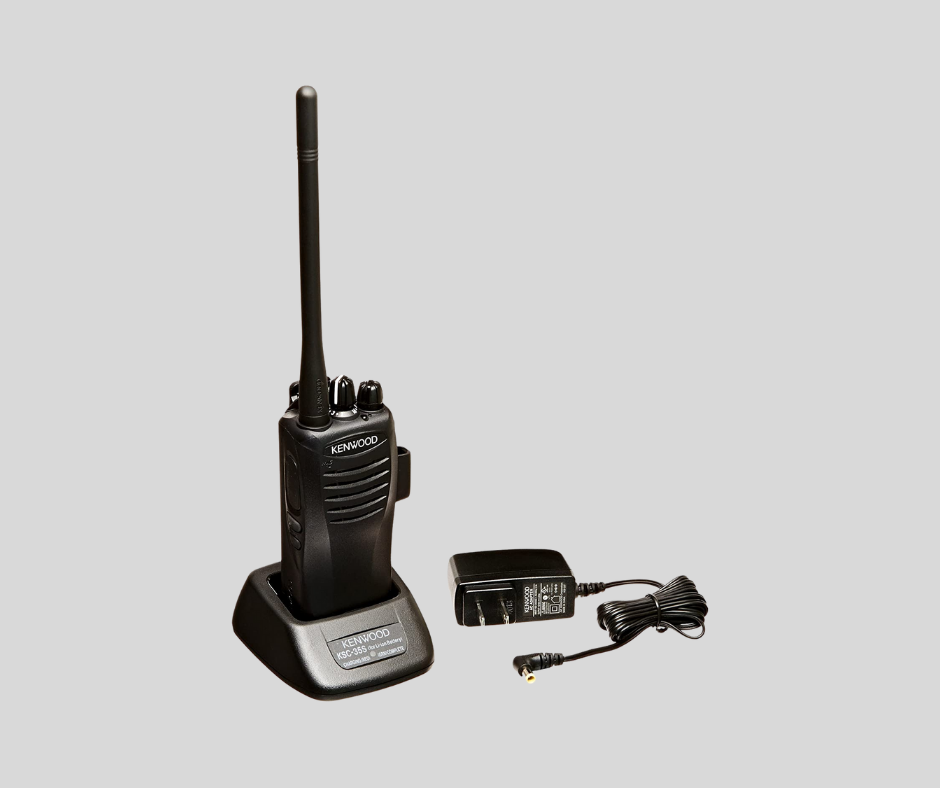
Image: Amazon.com
| Spec | Detail |
|---|---|
| Type | VHF Business Radio |
| Price | $80–120 per unit |
| Real World Range | Up to 3 miles |
| Battery | Li-ion — 12 hours |
| PTT Button | Yes — professional grade side PTT |
| License Required | Yes — business VHF license |
| Channels | 16 |
| Best For | Retail, warehouses, construction teams |
This is the one I’d hand to a crew foreman. 12 hours of battery — that’s a full double shift covered. I ran it 7am to 10pm on a site inspection day and it still had charge. Nothing worse than a dead radio when your crew’s still working and you’re trying to reach someone on the other end of a warehouse floor.
The PTT on the Kenwood ProTalk is genuinely professional grade. It’s got a satisfying click. Positioned perfectly for thumb activation while holding the radio. If you’re running a 20-man crew across a noisy distribution center, this handles it. Your guys won’t be cupping their ears trying to hear. The VHF signal cuts through building materials better than FRS, which matters the moment you’re working in or around steel structures.
Here’s the honest downside — it needs a business license. That’s not a deal breaker but it is a step. If you’re an individual or casual user, the licensing process is a friction point. For an actual business? Just handle it. It’s a one-time thing and it protects your frequencies. The per-unit price at $80–120 adds up fast if you’re outfitting a large team, so factor that in. But if Nextel was your team communication backbone, this is the professional replacement. See how it stacks up against other options in our walkie talkie range guide.
✓ Pros
- Professional business grade PTT button
- 12 hour Li-ion battery — full shift covered
- Clear audio in noisy environments
- Durable build quality
- 16 channels for team separation
✗ Cons
- Business license required — extra step
- Higher price per unit adds up for large teams
- No FRS compatibility
Verdict
If Nextel was your team communication backbone — the Kenwood ProTalk is the professional replacement. Built for shift work. Built to last.
Motorola Talkabout T210

Image: Amazon.com
| Spec | Detail |
|---|---|
| Type | FRS Radio |
| Price | $25–40 per pair |
| Real World Range | Up to 1.5 miles |
| Battery | AAA batteries |
| PTT Button | Yes — simple side PTT |
| License Required | No — FRS only |
| Best For | Family use, casual events, kids |
Look — $25 for a pair of PTT radios. That’s it. If you’ve got kids who want walkie talkies, or you need something for a neighborhood event, a camping trip, or a casual family situation — this is the answer. No license. No app. No subscription. Just press and talk.
The AAA battery requirement is the thing that’ll eventually annoy you. You’ll burn through a set on a busy day and need spares. That’s the price of entry at this cost level. Range is honest at 1.5 miles open air — realistically 500–800 feet in suburban environments with houses and trees in the way. Don’t expect more than that and you won’t be disappointed.
It’s not a professional tool. Don’t put this on a job site where communication matters. But for what it is — an affordable, dead-simple push-to-talk radio — it delivers exactly what it promises. If you want to explore more budget options, we’ve covered a lot of ground in our budget walkie talkie options guide.
✓ Pros
- Cheapest PTT option on this list
- No license needed — FRS only
- Dead simple to use out of the box
- Good for casual and family use
✗ Cons
- AAA batteries only — no rechargeables
- Limited range — not for large sites
- Basic features only — no frills
Verdict
If you just need PTT communication for occasional use without spending much — this gets the job done. Don’t expect professional range or durability.
Push-to-Talk Apps — Free Nextel Alternative on Your Phone
If dedicated radios aren’t your answer, there are PTT apps that run on your smartphone. They’re not perfect. But they’re worth knowing about.
Zello PTT App is the closest thing to Nextel on a smartphone. It turns your phone into a push-to-talk radio over WiFi or cellular. The interface is simple. You hold a button, you talk. Your contacts hear you through a speaker like a radio. It’s free for basic use and there’s a paid business tier. The catch? It needs internet. No signal, no communication. That’s a hard limit.
Voxer works similarly — PTT over data, with the added feature that messages are stored if the recipient isn’t listening live. Think of it like PTT with voicemail backup. Good for teams that aren’t always available simultaneously. Still needs cell or WiFi coverage.
Microsoft Teams PTT is built into the Teams platform and works well for business environments where everyone’s already using Teams. It’s practical if your team’s already in that ecosystem. But it’s another layer of software on top of your existing setup.
Here’s the honest truth about all of these — they work great until you need them most. Underground parking garage. Rural construction site. Dead zone in a warehouse. The moment you lose signal, your communication disappears. A dedicated radio doesn’t care about your cell carrier. It just works. That’s the trade-off you’re making. For most field environments, a real radio still wins. If you want to understand frequencies and why they matter for range and penetration, our FRS radio frequencies guide breaks it down clearly.
Radio vs App — Which Nextel Replacement Do You Need?
Not every situation calls for the same solution. Here’s how to think about it honestly.
Construction, security, or field operations. Get a dedicated radio. Full stop. You need communication that works when cell signal doesn’t exist or is inconsistent. If you’re running a crew across a job site, the Kenwood ProTalk is your answer. The PTT is professional grade. The battery covers a full shift. And it doesn’t depend on a tower that may or may not have coverage at your location.
Family use, camping, events. The Motorola T460 or T210 covers this completely. Under $80 for a pair. No monthly fees. No license. Press the button and talk. That’s Nextel’s spirit without Nextel’s infrastructure costs. Ever tried coordinating six family members across a theme park on a dead phone battery? That’s what these are for.
Budget-first, occasional use. The T210 at $25–40 a pair is the answer. Accept the range limitations, keep spare AAAs around, and you’ve got a functional PTT solution for basically no money.
Smartphone only — team spread across multiple locations. Zello is your best bet. It’s free, it works on any smartphone, and the PTT interface is intuitive enough that your team won’t need training. Just accept that it lives or dies on your data connection.
The honest summary: if you’re replacing Nextel for work, buy a radio. If you’re replacing it for convenience and everyone’s in cell range, an app works fine. The moment you go off-grid or into a building with poor signal, only a radio has your back.
Common Questions
What happened to Nextel phones?
Nextel was acquired by Sprint in 2005 for $35 billion. The two companies ran incompatible networks — Sprint used CDMA and Nextel used iDEN — and they couldn’t be merged. Sprint stopped investing in the iDEN network and officially shut it down on June 30, 2013. All Nextel phones stopped working that day.
Is there a replacement for Nextel?
Yes — but nothing is a perfect one-to-one replacement. For dedicated PTT without a monthly bill, FRS/GMRS radios like the Motorola Talkabout T460 come closest. For business use, the Kenwood ProTalk is a professional grade option. For smartphone users, Zello offers PTT over cellular data. None of them have the nationwide coverage Nextel had, but for local team use they’re solid.
What is the best Nextel alternative?
For most people who miss Nextel’s push-to-talk feel, the Motorola Talkabout T460 is the best starting point. It’s got a dedicated PTT button, rechargeable batteries, clear audio, and no monthly fees. For professional teams and business environments, the Kenwood ProTalk TK-2400V16P is the stronger choice with 12-hour battery life and business-grade build quality.
Do Nextel walkie talkie phones still work?
No. The Nextel network was shut down in June 2013. Any Nextel handset you still have won’t connect to a network. The iDEN network infrastructure is gone. You’d need a modern push-to-talk alternative — either a dedicated two-way radio or a PTT app on your smartphone.
What app works like Nextel?
Zello is the closest smartphone app to the Nextel experience. It turns your phone into a PTT radio over WiFi or cellular data. You hold a button to talk, release to listen — exactly like Nextel’s Direct Connect. Voxer is another option with the added ability to replay missed messages. Both are free for basic use. The limitation with all apps is that they need an internet connection to work.
What is push-to-talk radio?
Push-to-talk — or PTT — is a communication method where you press a button to transmit and release it to receive. It’s half-duplex, meaning only one person talks at a time. This is how Nextel’s Direct Connect worked and it’s how all two-way radios operate. It’s faster than a phone call for quick team communication, requires no call setup time, and works without cell network infrastructure when using dedicated radios.
Curious about the full Nextel story? Read our what happened to Nextel guide covering the Sprint acquisition and iDEN shutdown.
Looking for a walkie talkie app alternative? Read our Marco Polo app review for a video messenger option.